
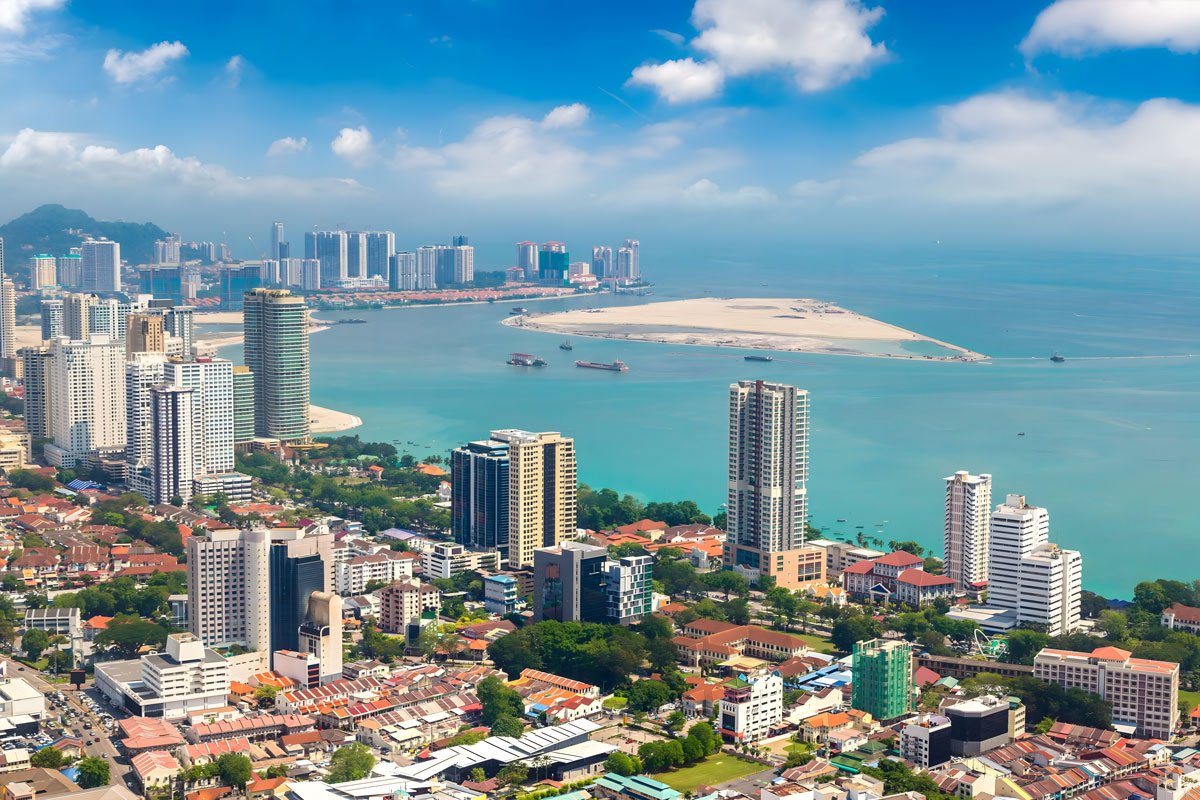
Of all Malaysian cities, Penang feels the most familiar to many Taiwanese: a large Chinese community, Mandarin and Hokkien widely spoken, great food, and a mature semiconductor and electronics industry. This article covers what is driving Penang property in 2026, the popular areas, and the rules foreign buyers need to know.
Why do Taiwanese buyers look at Penang?
- Backed by the tech industry: Penang is known as the “Silicon Valley of the East”. Many international semiconductor and electronics firms are based here, bringing steady demand from professionals for rental homes.
- A world heritage city: George Town was inscribed as a UNESCO World Heritage Site in 2008, giving it lasting appeal for tourism and culture.
- Strong healthcare: Penang is one of Malaysia’s main medical tourism cities, with many private hospitals, which matters especially to retirees.
- A comfortable pace: more relaxed than Kuala Lumpur while still offering city convenience, making it well suited to long stays or retirement.
For an overview of the city, see our Penang property and city guide.
What the Penang market is like
The Penang market is driven mainly by owner-occupiers and long-term holders, and it tends to move steadily. Land on Penang Island is limited, and land reclamation and large developments are rolling out gradually, so new launches in prime locations are relatively scarce. For investors who value capital preservation and quality of life, Penang suits a medium-to-long-term holding strategy rather than quick buying and selling.
Popular areas in Penang
George Town
The city centre and heritage zone, with the highest concentration of amenities, healthcare and schools. Lumina, in the heart of George Town, is close to Island Hospital and Loh Guan Lye Specialists Centre, which appeals to families who want healthcare nearby.
The Light City and Queensbay
On the east coast of the island, near Queensbay Mall and the Penang Bridge, with easy access to the airport and industrial zones. It is one of the most watched growth areas in recent years. The Lightwater is a purely residential waterfront community, and The Lighthauz offers freehold serviced apartments from about RM1,000 per sq ft.
Bayan Lepas
Next to the international airport and the free industrial zone, this is where many tech professionals live, so rental demand is steady.
Tanjung Bungah and Batu Ferringhi
On the island’s north coast, known for sea views and a resort feel, and popular with expatriates and retirees.
Seberang Perai
On the mainland, with more affordable prices and more land, linked to the island by the Penang Bridge and the Second Bridge.
What should foreigners watch for when buying in Penang?
- Minimum purchase price: foreign buyers must meet the state’s minimum price. On Penang Island the usual threshold for strata homes is RM1 million, and higher for landed homes; Seberang Perai’s thresholds are lower. The rules change, so check the state government’s latest announcement.
- State consent: foreigners need state consent to buy and may have to pay a foreigner levy.
- Transfer stamp duty: from 2026, stamp duty on residential transfers to foreign buyers is a flat 8%.
- Developer and property: with land on the island so limited, pay close attention to the developer’s track record, the community plan and the quality of management.
For the full list of taxes, see taxes and fees for foreigners buying property in Malaysia. If you plan to combine the purchase with long-term residence, see our MM2H guide for Taiwanese applicants.
Who is Penang for?
- Families planning retirement or long stays who value healthcare and quality of life
- Buyers who prefer a low-density, relaxed environment
- Investors whose main goal is medium-to-long-term holding and preserving capital
In summary
Penang’s value is not in short-term price jumps but in steady demand supported over the long term by industry, healthcare and quality of life. Fang Heng Tycoon has a local team in Penang that can compare areas and properties with you, estimate your budget and arrange viewings. Book a consultation.
Note: information is based on public sources at the time of writing. Developers’ and the government’s latest announcements prevail for prices and regulations.